
On 18 and 19 February 2026, more than 70 experts from Belgium, Germany, Luxembourg and the Netherlands gathered in Aachen to discuss how climate change information is being used in flood risk management. The workshop provided an opportunity to compare approaches, share lessons learned and explore how stronger cross border cooperation can support climate resilience. Discussions focused on the practical application of climate scenarios, the communication of flood risk and uncertainty, and the challenges of translating climate information into effective flood risk management policies and measures.
Organised under the umbrella of the JCAR ATRACE programme and supported by national and regional authorities from the Benelux countries and Germany, the workshop provided a platform for researchers, policymakers and practitioners to learn from each other's approaches and identify opportunities for closer cooperation.
Learning Across Borders
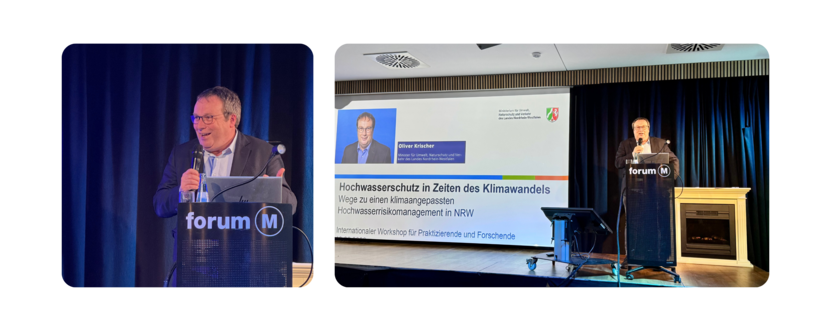
The workshop was opened by Oliver Krischer, Minister for the Environment, Nature Protection and Transport of North Rhine-Westphalia. In his opening remarks, he emphasised the importance of collaboration between science and policy and highlighted the value of learning across borders in addressing climate-related challenges.
Throughout the two-day event, participants compared how different regions currently use climate information in flood risk management. Discussions revealed significant variation in the ways climate scenarios are applied, ranging from regions that systematically incorporate future climate projections into planning and infrastructure design to those that continue to rely primarily on historical data. Despite the diversity of approaches, participants identified several common challenges, including the communication of uncertainty, the translation of climate information into practical action, and the need for stronger coordination across river basins and national borders.
A Shared Challenge: Making Climate Information Actionable
A recurring theme throughout the workshop was the need to make climate information easier to use.
While scientists often emphasise uncertainty and the complexities of climate modelling, practitioners highlighted the importance of simple and actionable guidance. Participants agreed that climate scenarios must be communicated in a way that supports decision-making by policymakers, communities, and flood risk managers.
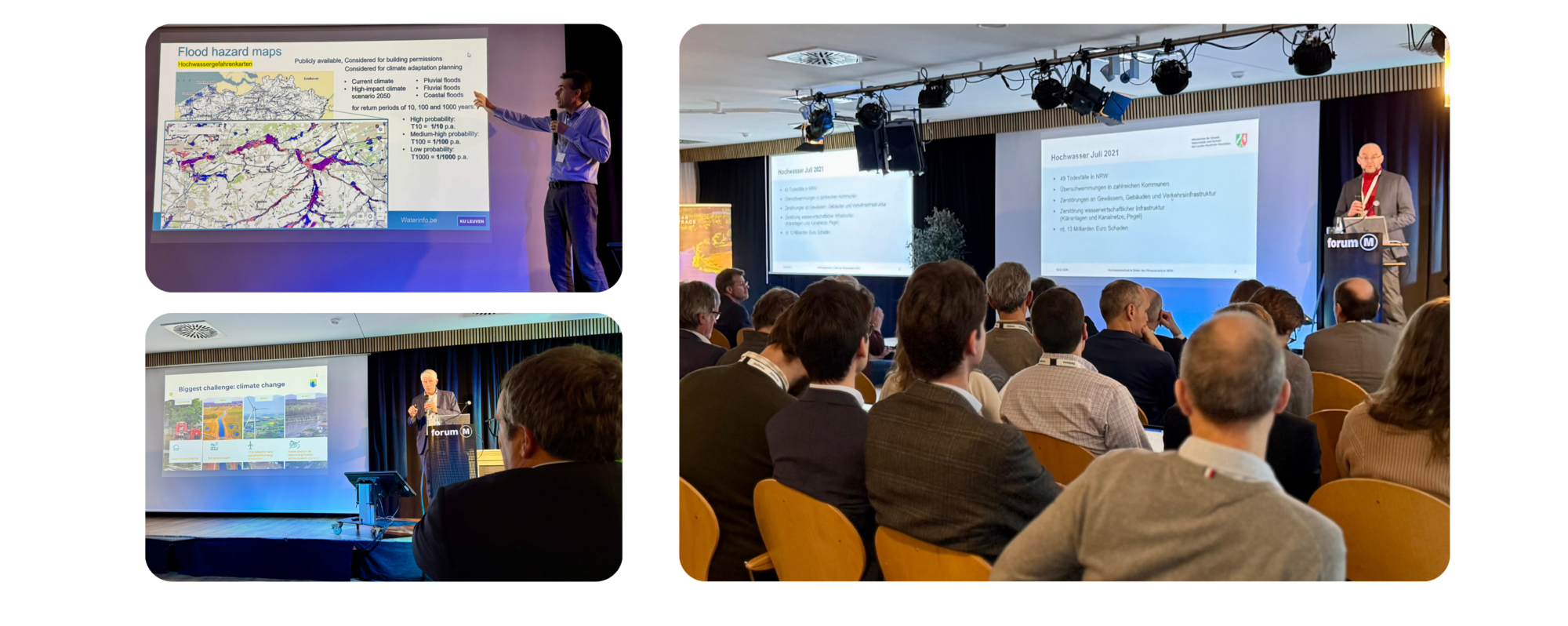
Examples from Flanders generated particular interest. Participants discussed how future flood maps are already being used to support spatial planning decisions and encourage climate-resilient development. The Flemish approach also demonstrates how flood risk information can be communicated openly to citizens while maintaining trust and public acceptance. More broadly, participants highlighted the value of stress testing current flood risk management strategies under future climate conditions as a practical way to support robust decision-making despite uncertainty.
Strengthening Cooperation Across Borders
The workshop also highlighted the growing need for cross-border coordination.
Flood risks do not stop at administrative boundaries, and decisions taken upstream can affect communities downstream. Participants stressed the importance of aligning approaches, sharing data and improving understanding of how climate adaptation measures may influence neighbouring regions.
There was broad agreement that stronger cooperation could help improve consistency in climate scenarios, flood risk assessments, and adaptation planning across international river basins. Participants noted that the main challenge is often not the availability of climate information itself, but how it is communicated, translated into decision making, and embedded in policy, planning and investment choices.
How Science Can Support Practice
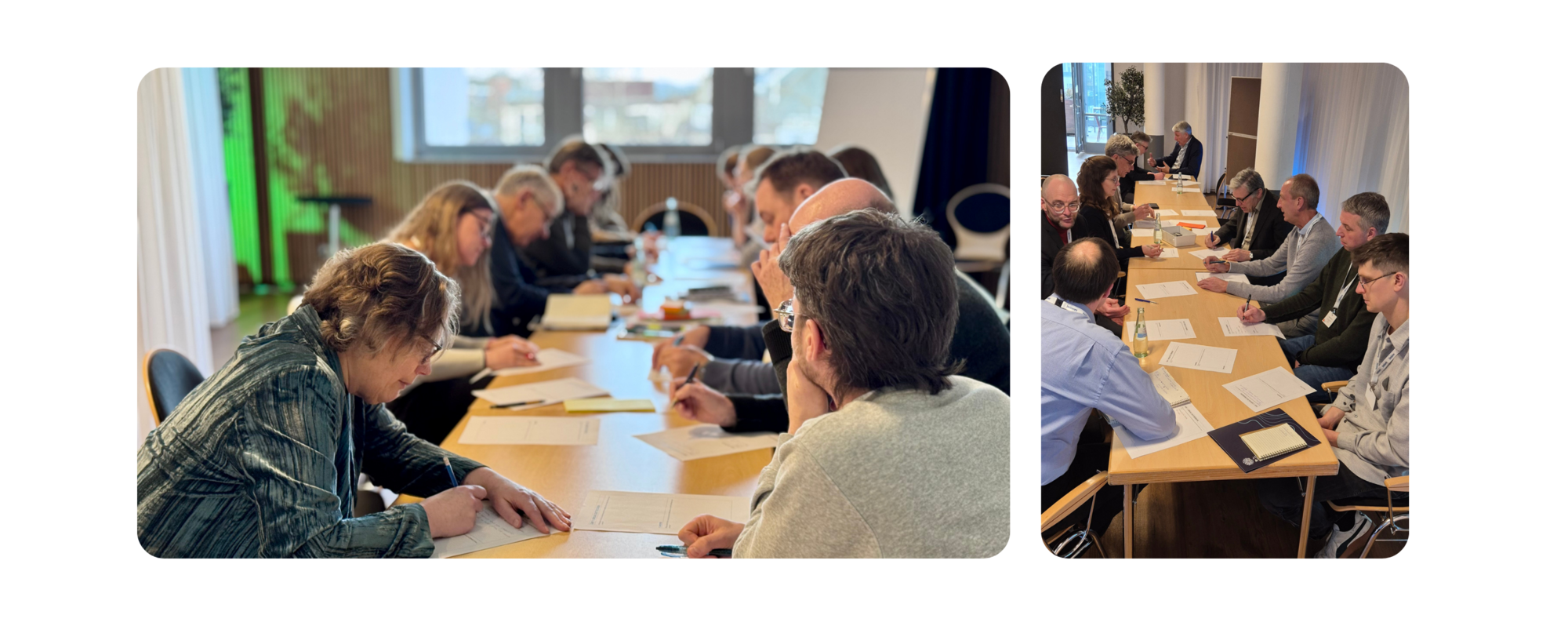
Based on the key insights from the workshop, participants identified several areas where scientific research can contribute to future flood risk management:
-
Supporting stress tests for existing and planned flood management measures.
-
Evaluating communication strategies for climate information.
-
Assessing upstream-downstream impacts in transboundary river basins.
-
Exploring effective combinations of structural, nature-based, and insurance-based measures.
-
Investigating the role of spatial planning and climate labels in improving resilience.
Looking Ahead
The Aachen workshop demonstrated the value of bringing together researchers and practitioners from across Northwestern Europe. Although approaches differ between regions, participants shared a common objective: improving resilience to future floods in a changing climate.
The discussions reinforced one clear message: effective flood risk management requires not only better science, but also better communication, stronger cooperation, and practical solutions that can be implemented across borders.
More information
- Report of the workshop in Aachen, including the main discussions, key challenges and recommendations on the use of climate change information in flood risk management. Click to download
-
Paper by Macdonald et al. (2026), which compares current approaches to climate change in flood risk management across the BeNeLux countries and Germany and provided an important scientific foundation for the workshop discussions. Click to download


