
Five years after the catastrophic 2021 flood in the Ahr Valley, researchers, emergency responders, policymakers, and local stakeholders gathered in Remagen, Germany, to reflect on what we have learned and where flood risk research needs to go next. The conference, “Five Years After the 2021 Flood – Research Perspectives in Transition", provided a unique opportunity to connect scientific advances with practical experiences from one of Europe's most devastating recent flood disasters.
As part of the JCAR ATRACE project, I presented my work on flood risk system stress testing, an emerging approach that helps us explore how societies might respond to extreme but plausible flood events that exceed conventional design standards. The discussions throughout the conference reinforced the importance of looking beyond historical experience and preparing for events that may not have occurred before but remain possible in a changing climate.
Understanding Flood Risk Through Stress Testing
Traditional flood risk assessments often focus on events associated with specific probabilities or design standards. While these approaches remain valuable, recent disasters have demonstrated that the greatest impacts can occur when events exceed our expectations.
Stress testing takes a different perspective. Instead of asking whether existing infrastructure can withstand a flood of a certain return period, stress testing asks a broader question:
What happens when multiple aspects of the flood risk system are pushed to their limits?
This involves simulating very rare but physically plausible events and examining their consequences for infrastructure, emergency management systems, critical services, and local communities.
A Framework for Exploring Extreme Flood Scenarios
A central part of my work within JCAR ATRACE has been reviewing and categorising the different scientific approaches used to conduct flood stress tests. The result is a framework that maps the complete chain from the generation of extreme events to their societal consequences.
The framework distinguishes three main stages: triggers, pathways, and impacts.
Triggers represent the events that initiate flooding. These may include low-likelihood precipitation scenarios, extreme river discharges, or changes driven by climate change. Different techniques can be used to create such scenarios, including statistical analyses, event reconstruction, climate modelling, and counterfactual approaches.
Pathways describe how floodwaters propagate through the environment and interact with human systems. This stage includes hydrological and hydrodynamic models, assessments of infrastructure operations, land-use scenarios, and analyses of potential flood defence failures.
Impacts focus on the consequences for society. These may include damage to buildings, disruptions to transport networks, threats to critical infrastructure, economic losses, and direct impacts on human health.
The framework also highlights the wide range of methods available throughout the modelling chain, from climate modelling and event reconstruction to geospatial analysis, agent-based modelling, and machine-learning approaches. By organising these methods in a common structure, researchers and practitioners can identify the most suitable tools for their specific objectives.
The framework presented during the conference is summarized below:
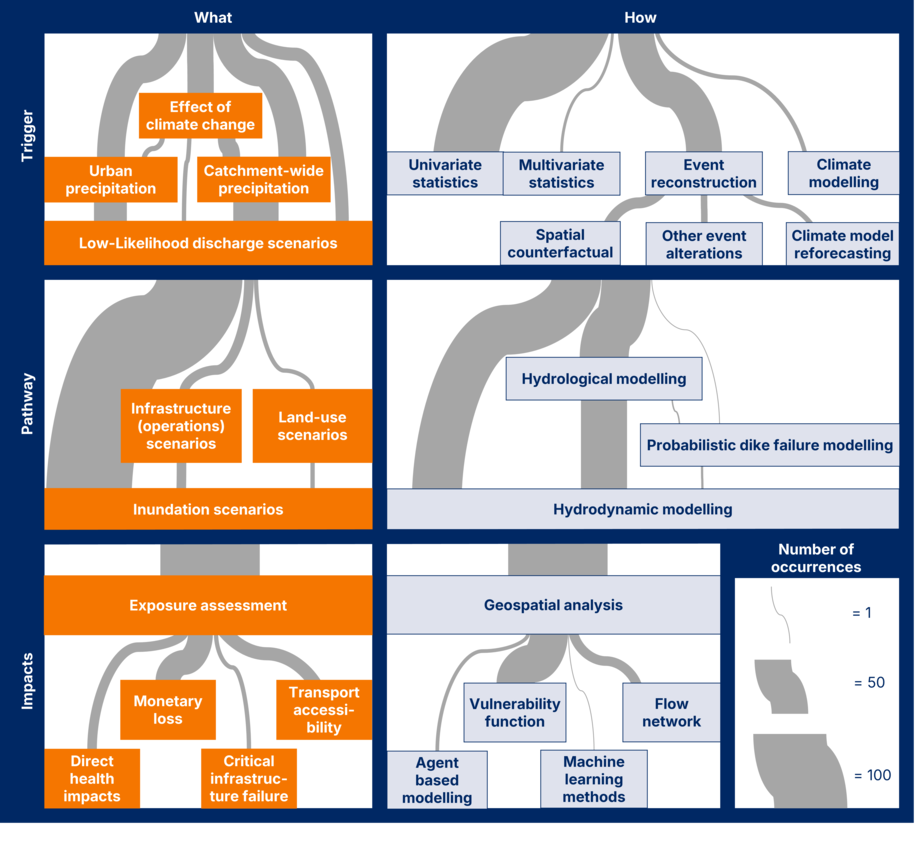
Figure 1. Conceptual framework developed through the JCAR ATRACE review of flood stress-testing approaches. The framework links hazard generation, flood propagation, and societal impacts while highlighting the methods used at each stage of the modelling process.
Innovations Across the Modelling Chain
One of the most valuable aspects of the conference was seeing how many new developments align with different elements of the stress-testing framework. Several presentations centered around new innovative methods used to simulate very extreme flood scenarios.
I was able to contribute by presenting three novel research methods from my institute, the GFZ Helmholtz Centre for Geosciences. These include a multivariate stochastic weather model capable of producing synthetic rainfall scenarios that remain physically realistic while exploring conditions beyond those observed in historical records.
Advances in hydraulic modelling were also presented. A highly efficient hydrodynamic model can now simulate both flash flooding and river flooding with remarkable speed, making it increasingly feasible to run large numbers of scenarios and support operational forecasting.
The last example focuses on early-warning systems. In this research counterfactual evacuation scenarios are applied to investigate how earlier warnings and improved communication could have influenced the outcomes of the 2021 Ahr Valley flood. The results indicated that improvements in warning systems could significantly reduce fatalities during future events.
Together, these advances demonstrate how stress testing can help identify vulnerabilities before disasters occur and support more effective preparedness measures.
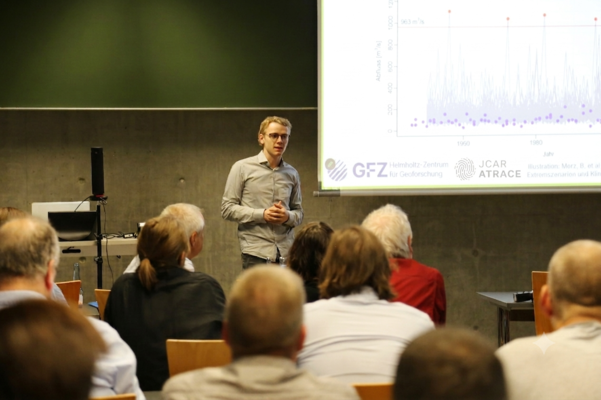
Figure 2. Presenting research from the JCAR-ATRACE programm at the conference, “Five Years After the 2021 Flood" in Remagen.
Learning from the Ahr Valley
While scientific presentations formed the core of the conference, some of the most important insights came from engaging directly with the history of the disaster itself.
A guided visit through Dernau in the Ahr Valley provided valuable local perspectives on the 2021 flood. Hearing first-hand accounts from residents who experienced the event brought an important human dimension to discussions that are often dominated by models and statistics.
These conversations underscored the importance of preparedness, communication, and effective crisis management. They also highlighted that flood risk is never solely a hydrological problem; it is equally a societal challenge.
Understanding how people receive warnings, make decisions, and respond during emergencies is just as important as understanding rainfall and river discharge.
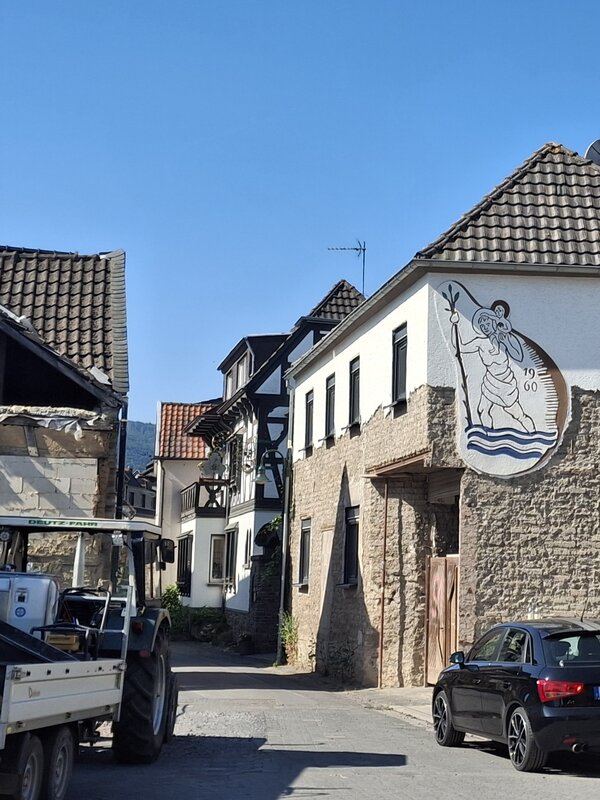
Figure 3. Unrenovated building indicating the depth of the 2021 Ahrtal flood in Dernau.
Bringing These Lessons Back to JCAR
The conference allowed me to share insights and tools developed through the JCAR ATRACE stress test for the Rur River catchment while also learning from leading researchers and practitioners from across Europe. International contributions from organisations such as Deltares and the University of Valencia demonstrated the value of exchanging knowledge across borders and disciplines.
Most importantly, the event strengthened my conviction that stress testing can become a powerful tool for improving flood resilience. By exploring extreme scenarios before they occur, we can better understand vulnerabilities, strengthen emergency planning, and support more informed decision-making.
Going forward, I aim to ensure that the results generated within JCAR ATRACE are communicated to the right stakeholders in a way that supports practical action. Scientific knowledge only creates value when it informs real-world decisions.
Five years after the Ahr Valley disaster, the challenge is no longer simply understanding what happened. The real challenge is using those lessons to prepare for what might happen next.


